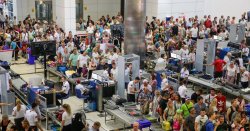

"Unacceptable" queues triggered by the EU Entry-Exit System (EES) are deterring travellers, Europe’s airport trade body warned. While passenger numbers surged 2.6% in the first six months of 2026, compared to the same period last year, the pace "markedly" slowed down in the second quarter.
ACI Europe figures showed the growth was driven by a 4.3% boom in the first three months, compared to just 1.3% in the second. The war in the Middle East impacted slowed traffic to the region, the body said, while some airlines cut capacity in response to higher jet fuel prices. However, ACI Europe director general Olivier Jankovec also noted the negative impact of the EES system, which requires travellers to give biometric data at EU borders.
He said: “Looking ahead, fixing the Schengen Entry-Exit System must be Europe’s immediate priority. Long, unpredictable and unacceptable waiting times at border control have started acting as a deterrent to travel – and undermine the standing and reputation of Europe as an efficient and welcoming destination," reports Travel Weekly.
Several airlines have told passengers to arrive early at the airport to allow for extra processing time, however, some destinations such as Greece suspended the checks altogether due to the queues.
Mr Jankovec said that "beyond that, the evolution of the war in the Middle East – and its operational as well as macro-economic repercussions – will largely determine the trajectory of European air traffic through the remainder of the year".
He added: "European aviation is definitely operating in a far more volatile environment than in the decade before the pandemic."
Domestic passenger traffic (+3%) outperformed international passenger levels (+2.5%) during the first half of the year for the first time since the recovery from the Covid-19 pandemic.
London Heathrow remained the busiest European airport, handling a record 40million passengers, up by 0.2% over the first half of 2025. It was closely followed by Istanbul with 39.84 million passengers.