
The UK boasts no shortage of stunning locations for a day out, a weekend escape or even a holiday closer to home. Whether it's charming market towns such as Narberth, the understated natural magnificence of Anglesey or the monumental scale and grandeur of London, there's plenty to occupy you for years to come.
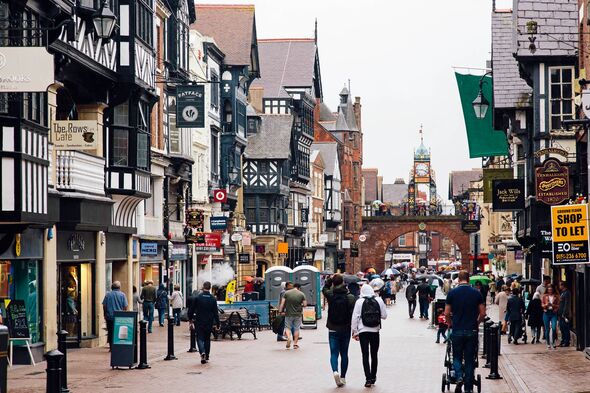
But there's another British city that remains overlooked by many despite repeated accolades. Chester, with its cobbled streets, independent shops, distinctive black and white half-timbered buildings and thousands of years of history, has steadily accumulated praise, with some declaring it possesses one of Britain's "best high streets" while others venture considerably further, proclaiming it is the "world's prettiest city".
Placing it amongst Britain's 10 finest high streets last year, The Telegraph declared: "It's certainly a beauty. A walk along its four, half-timbered main streets is like a promenade through 2,000 years of history from the Romans to the modern day. Tudor buildings, Georgian townhouses and statement Victorian centrepieces complete a history-spanning backdrop to mooching, gift hunting and hot chocolate supping."

"Compact, bustling and packed with independent shops, Chester is big on festive atmosphere as well as rich with heritage. Look out for the Christmas market on Town Hall Square... or book a themed walking tour to explore lesser-known attractions, such as the café-bars of medieval Godstall Lane or the haunted pubs of Lower Bridge Street."
The city has even been crowned the most beautiful in the world, pushing Venice into second position, reports WalesOnline. It received this accolade after mathematicians applied the ancient "golden ratio" to its layout.

The golden ratio is a formula employed by artists, architects and designers to produce visually appealing, naturally harmonious designs and is also frequently found in nature, including in flowers and shells.
The Visit Cheshire website describes The Rows as the "undisputed centrepiece" of Chester's retail offering, calling them the "extraordinary 700-year-old two-tiered shopping galleries that run along the four main streets of the city centre. There is nowhere else in the world quite like them".
It continues: "These two-tiered timber-framed galleries line the main streets of the city. Throughout much of the city's history, the Rows are where the city's residents would come to trade, drink, dine, and more. Explore the Rows today and you're continuing this legacy as you'll find them home to some of the quirkiest independent shops, restaurants, bars, and attractions."

Chester stands as one of Britain's most historically important cities and boasts a 1,000-year-old cathedral, the nation's largest Roman amphitheatre, the most complete city walls in the country and Britain's oldest racecourse. Among the finest ways to discover the city is through a guided tour, with numerous choices available — from a ghost tour with Chester Ghost Tours to discovering the city's independent culinary scene with Tours Around Chester, or enjoying a river cruise with Chester Boat.

Chester offers a remarkably diverse selection of dining establishments for a city of its size, featuring French, Italian, Thai, Turkish, tapas and much more besides. Chester Market contains a food court boasting an extensive range of options, from specialist cheese and coffee outlets to Mexican street food, a French bakery and fishmongers.
The market also features homeware shops, a dog groomer and a bar. Eateries frequently highlighted by locals recommending the finest dining spots include Spanish restaurant Porta, Italian establishment Ristorante Sergio, French venue Chez Jules and vegan eatery Shrub.


Chester is also home to some stunning historic public houses, with the distinctive black and white half-timbered Bear and Billet tracing its origins to 1664, while The Pied Bull dates to 1155 and still features an original handmade staircase from 1535.
Chester was established by the Romans during the first century AD and named Deva after the River Dee. They constructed formidable city walls (portions of the original Roman stonework remain visible today) alongside a substantial harbour, establishing it as one of Britain's most significant Roman settlements.


During the Dark Ages, Viking raiders navigated their longboats upriver to assault the city, and by mediaeval times it had evolved into a prosperous trading port (the period when the Rows were constructed). Throughout the Civil War, Chester endured a two-year siege before hunger compelled its inhabitants to capitulate.

By the Georgian period, while the port had vanished, Chester was flourishing as a county town populated by affluent merchants.